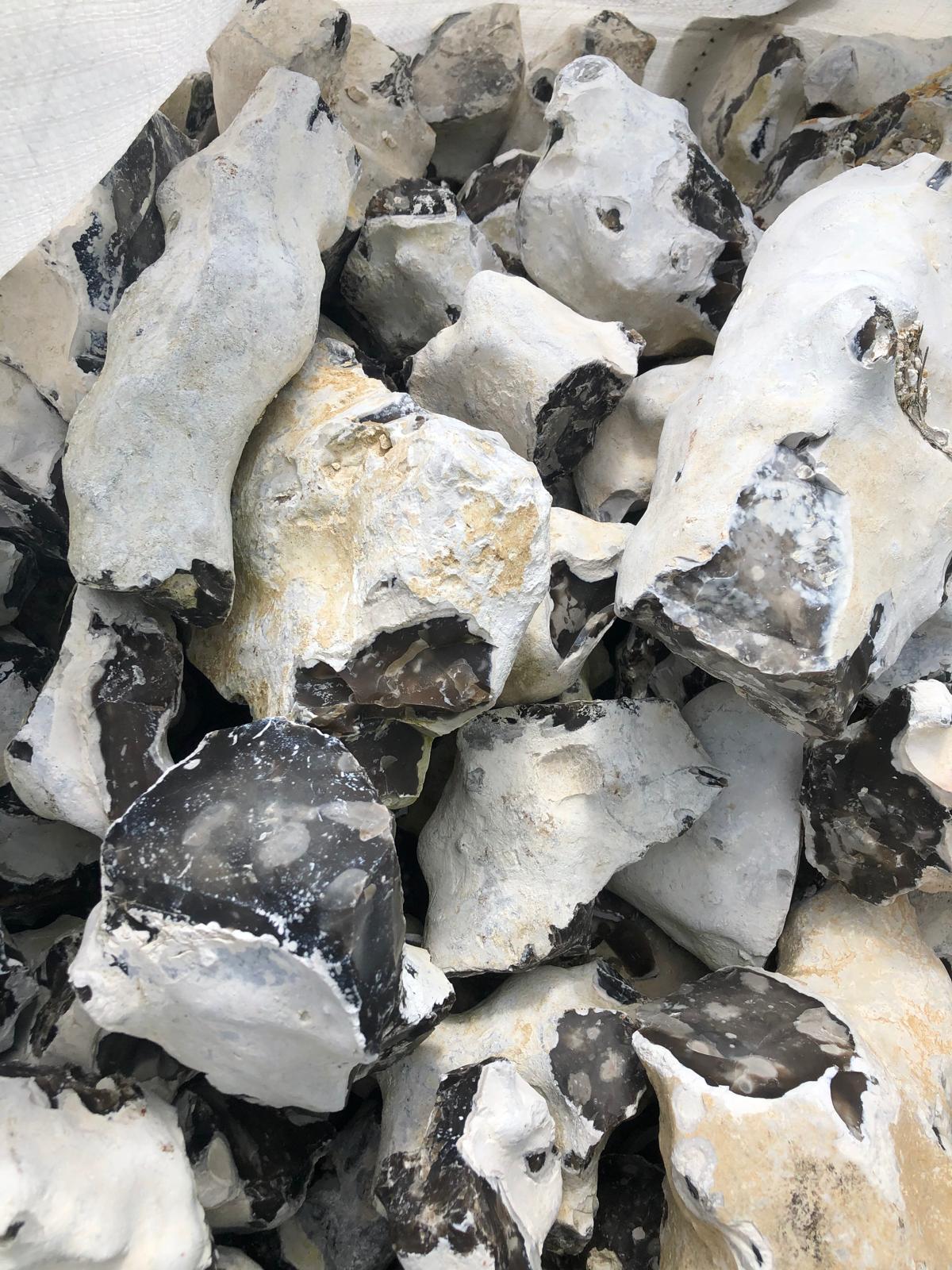


Types of Flint & Flint as a Building Material: FAQ
Flint is one of the most versatile and enduring natural building materials, but it’s also one of the most misunderstood. Here we answer the most common questions about the different types of flint we supply, how it’s knapped, and why it’s such a sustainable choice for building and restoration work.
What types of flint do you supply?
We supply chalk flint, field flint, agricultural lime, shooting flint, and XL chalk flint nodules for speciality work and historical knapping.
What is the difference between knapped and unknapped flint?
Unknapped flint is in its natural, untouched state as it comes out of the ground. Knapping uses specialist machinery to break the round stone so the inner cortex is exposed — this is the finish typically used in flint walling and other construction work.
Which type of flint is best for knapping?
Our XL chalk quarry flint is best suited for knapping. Each XL nodule is carefully selected and examined for cracks, fractures, and imperfections before it leaves us.
Why does flint colour vary between batches?
Flint is a natural product, so its colour depends on the environment it formed in, how long it’s been since excavation, and other natural variables — meaning some variation between batches is completely normal.
Is your flint locally sourced?
We work with quarries across the UK to source the best quality flint and ensure a steady, reliable supply for our customers without delivery delays.
Is flint sustainable as a building material?
Incredibly so. It’s 100% natural, locally sourced, and requires no chemical treatment
Is flint suitable for load-bearing walls, or facing only?
For load-bearing walls, we recommend pre-made flint blocks. For front-facing walls, flint works beautifully as a decorative material.
Do you supply or make flint blocks to order?
We don’t make flint blocks ourselves, but we work with excellent partners who do — get in touch and we’ll point you in the right direction.